 SiloSentry
Check before you make the trip.
Open the silo’s latest reported level and history. See which reading is fresh enough to plan around.
Grain-level monitoring for the people planning the next load. See what remains, spot a low level and know when a reading needs checking.
SiloSentry combines a monitor at the grain store with a customer application for the people running it.
An example product built around Dataplicity.
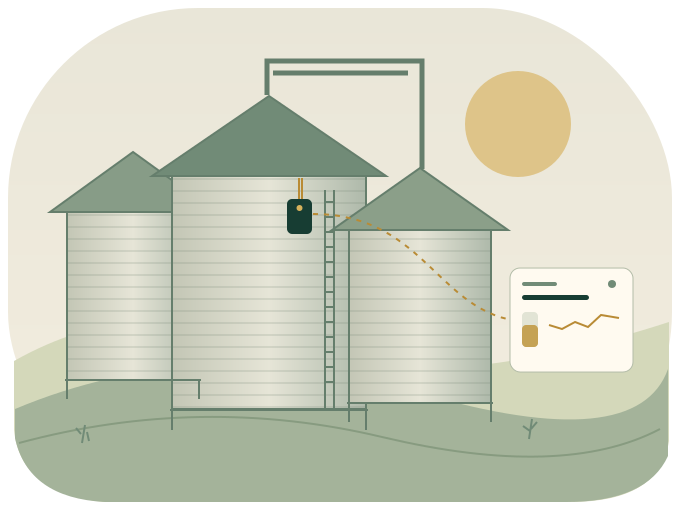
Open the silo’s latest reported level and history. See which reading is fresh enough to plan around.
A low level and a missing reading call for different decisions. Keep the warning and the connection state visible.
Know the site, the silo and the monitor you’re asking about. The team can investigate the equipment behind that reading.
What’s left? Is it running low? Can I trust this reading?
Follow North Silo at Ashton Mill. Switch between a normal report, a low-level warning, a stale sensor reading and a lost connection to see how the customer’s decision changes.
The last known value stays clearly marked when the monitor stops reporting. The person planning a load can see when they need a fresh measurement.
See how SiloSentry prepares this customer viewYour grain store
Wheat · Monitor SS-AM-01
68.2 m³
120 m³ capacitySample reading · 09:42Illustrative customer view. These controls change sample data on this page only.
Someone has to build the monitor, get it working at the mill, hand it over and answer the next call.
Meet the small SiloSentry team doing all of it. Follow the same monitor from a question on the bench to an installation and a field fault.
Follow SiloSentry behind the scenesThe grain silo gives the story a setting. The engineering questions, site handovers, customer expectations and support calls will be familiar to many equipment businesses.